MATTI BYE
PRESS
BIOGRAPHY WORKS CONCERTS CONTACT
▶︎ The Length Between Dusk and Dawn in Minutes (2026)
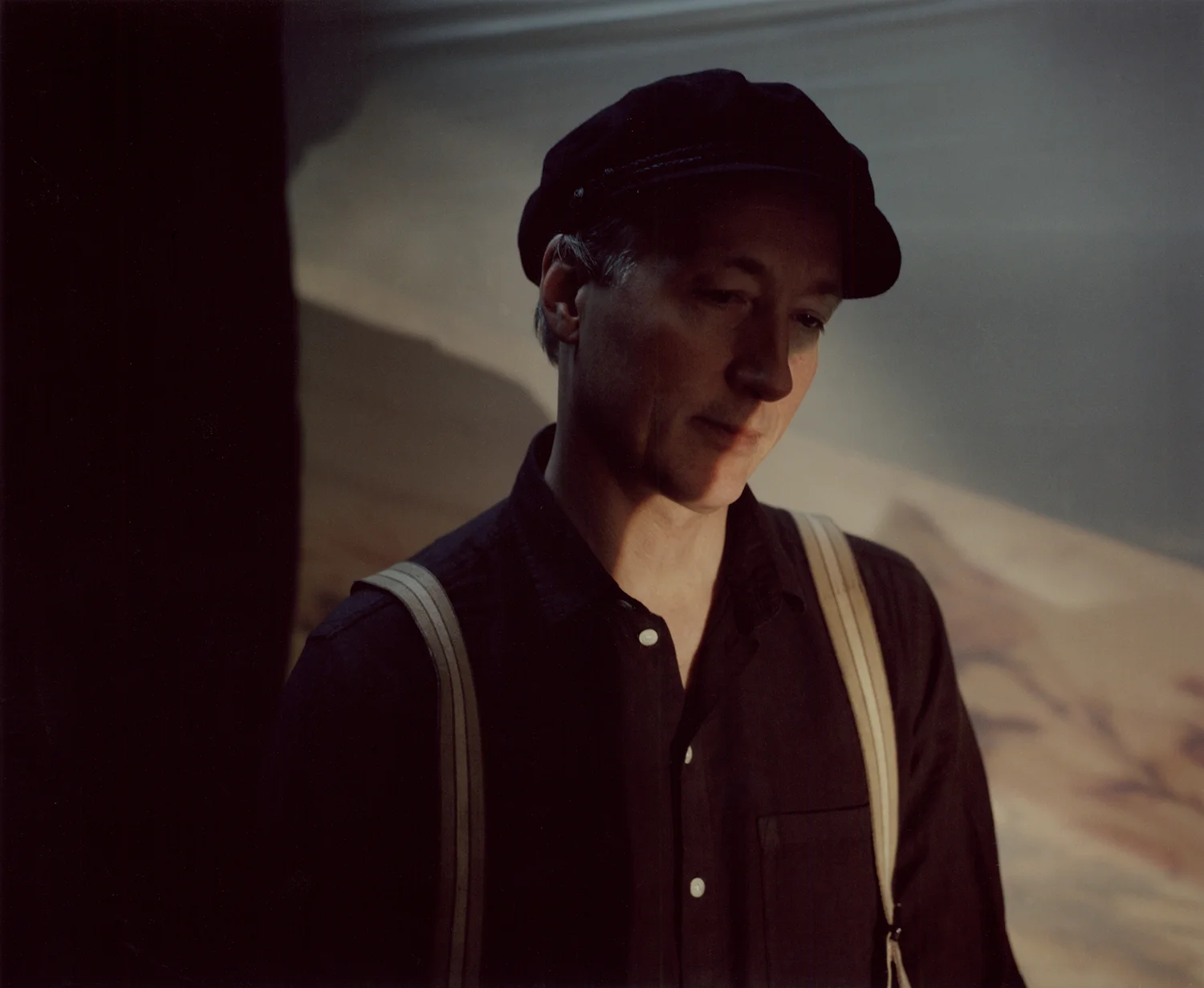
The Swedish composer and pianist Matti Bye still remembers exactly when he stopped constructing music. It was sometime during the long hours he spent losing himself in Debussy scores, until the notes disappeared and only sound remained. No plan. No goal.
Only the ear, the instrument, and the space in between. This state – the disappearance of time, the strange freedom of being utterly present – became the starting point for Matti Bye’s new solo album. The Length Between Dusk and Dawn in Minutes will be released on 18 September 2026 on Neue Meister.
As a film composer, Bye has secured a significant place in the Nordic musical landscape. His scores for Jan Troell’s Everlasting Moments and Pernilla August’s A Serious Game have been celebrated, as has his new music for classic silent films, with which he has appeared at MoMA in New York and the San Francisco Silent Film Festival. For his music to Farö he received both the Swedish Guldbagge Award for Best Original Music and the Finnish Harpa Nordic Film Music Prize.
Anyone familiar with his previous albums – Bethanien, This Forgotten Land, Capri Clouds – will know his affinity for dreamlike, neo-classically tinged sound worlds. But after completing this loose trilogy, Bye felt drawn in a different direction. He wanted to get to know the piano anew: not as an instrument of finished form, but as a resonant body of the moment. He returned to Debussy and Ravel – not to adopt their musical language, but to understand their way of thinking: sound as light and colour, as something that glows, refracts and shimmers; that does not fill a space, but tints it. This idea – that a tone does not simply sound, but creates an atmosphere – becomes the guiding principle of the album. At the same time, Bye was listening to obscure British acid-folk records from the late 1960s and early 1970s: Mark Fry, Trader Horne, Ithaca, Trees. Between these seemingly distant worlds, the first ideas for the new album
began to germinate.
The decisive transformation from idea to album took place in a very specific location. In winter, Bye travelled to Kulturhuset i Ytterjärna – an anthroposophical cultural centre around 50 kilometres south of Stockholm, which for decades has been regarded as a place of stillness, artistic experiment and reflection. Surrounded by snow and a silence in which one learns to listen again, a Bösendorfer concert grand waited there in a hall whose acoustics gave the notes space to breathe. He spent three days in this environment – and the sketches he had carried with him for months took on their final shape. “Played in a very soft dynamic, the recordings gradually revealed an inner landscape of overtones, colours and reflections,” is how Bye describes the process. Alongside the grand piano, analogue tape machines and a Space Echo were used – not to alienate the sound, but to extend it, to make it shimmer, to let it hover in time.
For Bye, music never arises in a vacuum – it is nourished by books, images, ideas. During the creation of the album he was accompanied by Proust, T. S. Eliot and James Joyce – masters of the stream of consciousness, of time as subjective experience. The philosopher Henri Bergson and his concept of durée played an equally important role: that flowing experience of time in which past, present and future merge into one another like colours on wet paper. From painting, he drew strength from Hilma af Klint’s spiritually charged abstractions and Max Ernst’s surreal imagery. The album’s floating experience of time also connects him with Alice Coltrane and Emahoy Tsege Mariam Gebru – two pianists whose meditative explorations of the instrument show how sound can act beyond form and structure. All this shapes a sound that, for all its quiet, can quite justifiably be called psychedelic – not in the sense of excess, but as an expansion of perception: “For me, it means a heightened awareness of colour, resonance and sound – a way of listening in which familiar sounds suddenly reveal unsuspected depths,” says Bye.
In this deliberate slowing-down, Bye does not see a retreat from the present, but a form of
resistance to distraction, acceleration and superficiality – a search for a more human rhythm of life. The best way to think of the album is as a continuous landscape rather than a collection of individual pieces. Movement I perhaps encapsulates the whole most succinctly: the spaciousness of the sound, the shifting colours, the balance between form and freedom. It was created in close collaboration with producer Anders af Klintberg and sound engineer Johan Hällgren, whose set of vintage ribbon microphones lends the sound its particular density and warmth.
For those who take the time to listen to the album from beginning to end, Bye offers just one sentence to take with them: “I hope the music gives you space for your own thoughts, images and associations.” Nothing more is needed.
▶︎ The Sea (2026)
Available now on clear vinyl LP, CD and digital formats via Denovali Records.
“It might sound like a cliché, but the music on the album ‘The Sea ’emerged from watching the sea every morning on Fårö – more precisely, in Aursviken. It was the subtle shifts in the sea, the waves, the direction of the wind, and the colour of the sky that filled me with inspiration. The light and the darkness. The fact that we have this beautiful sea surrounding us, and the sky above as an opening toward infinity. Sometimes it’s that simple. I recorded the entire album during the summer of 2024 in a barn on Fårö, using a 1920 Steinway grand piano and a Juno-60 synthesiser through a Nagra tape recorder.“
“His latest album The Sea, again for Denovali, is a gorgeous, highly evocative slice of neo-classical ambience. We can’t get enough of it.”
— Cyclic Defrost
Pianist and composer Matti Bye is known for his distinctive musical language, where piano meets analogue synthesizers, tape loops, and field recordings — a sonic world shaped through decades of work across film, visual art, theatre, and performance. From live accompaniment to silent films early in his career to award-winning film scores, solo recordings, and interdisciplinary collaborations, Bye has developed a deeply personal and immersive musical voice.
With The Sea, this expression is refracted through an acoustic-ambient, dreamlike and subtly psychedelic prism.
Recorded during the summer of 2024 in a barn on the island of Fårö, the album was created using only a 1920 Steinway grand piano and a Juno-60 synthesizer, recorded through a Nagra tape recorder. Out of these limited means emerges an expansive sonic landscape — intimate yet cinematic, tactile yet spacious. The music unfolds in slow movements where subtle shifts in tone, texture, and rhythm mirror the changing presence of the sea — waves, wind, shifting light and the changing colour of the sky. Like an impressionist painting in sound, The Sea drifts between stillness and movement, abstraction and melody, allowing time itself to slowly dissolve.
“It was the subtle shifts in the sea, the waves, the direction of the wind, and the colour of the sky that filled me with inspiration. The light and the darkness. The fact that we have this beautiful sea surrounding us, and the sky above as an opening toward infinity. Sometimes it’s that simple.”
— Matti Bye
Mixed by Anders Af Klintberg, with artwork by artist and photographer Martina Hoogland Ivanow
Reviews
“His latest album The Sea, again for Denovali, is a gorgeous highly evocative slice of neo classical ambience. We can’t get enough of it.”
— Cyclic Defrost
“Matti Bye releases The Sea via Denovali Records, recorded on Fårö with piano and analog synthesis at the core. Bye, known for film and performance work, extends his language of silent-era accompaniment into studio composition. Built around a 1920 Steinway and a Juno-60, the album channels tape saturation and room acoustics into a continuous, slow-form sequence. Tracks move through minimal piano figures, with loops and sustained tones shaping the harmonic frame.”
— Son of Marketing
▶︎ Capri Cloud (2024)
Matti Bye‘s third album, „Capri Clouds“, moves through the element of the air and further into space. A lone piano sounds, echoes - sometimes like a waltz. We have the sound of the wind with us and the sound of the sea below us as we fly, and above we hear the stars and planets spinning. A piano from the past, as if Satie met space - as if Spiritualized and Satie talked to each other across timeand space.These songs go straight to the heart and to the senses, and create images in your head. Stories from your own memory bank, as well as new visions – music to lean into, meditatively and hopefully longing. But there is also an undertone of something dark and desolate. Musically, Matti Bye moves within the realm of neo-classicism, but he is also approaching romanticism. References to composers suchas Schubert and Beethoven are to be found here, as well as to post-romantic bands such as Kraftwerk and The Cure. In this third album of a trilogy – the first was „Bethani- en“, the second „The Forgotten Land“ – Bye continues his musical journey. Here we encounter a brighter and lighter production. Anders af Klintberg has brought „Capri Clouds“ up from the underworld and the dream- scape, towards clouds and skies.
credits
released May 10, 2024
▶︎ This Forgotten Land (2017, 2020)
”Matti Bye’s This Forgotten Land rewrote the book on piano instrumentals, surrounding each track in uncanny, otherworldly atmospheres.” — The Arts Desk
“Spooked slow motion circus mannerisms conjure a mad whirligig at the end of time. Ambient traces of Debussy and Satie inform his piano.” — Uncut
“His studio is an analogue world of synths, pianos, celesta, Mellotron and organs, and his music alludes to the strange, romantic mood you get when you hear old merry go rounds, or mechanical instruments in small amusements parks, and abandoned places.” — The Wire
“Matti Bye is a unique artist who can create beautiful music where others would fail. This Forgotten land is a testament to his talent of painting wonderful pictures with music” — Vinyl Chapters
▶︎ Häxan (”Witchcraft Through the Ages”) (2006)
“Matti Bye’s soundtrack for the film ”Häxan” stood out for the way it enhanced the content of the film’s sequences to maximum effect, intimately complementing the theme, atmosphere and various elements in the scenes. The central musical theme, while remaining consistent, ranges between highly evocative free allusions and thematic uniformity in a bewitching flow of wide-ranging sequences, without ever losing expressive tension.”
— The Rimusicazioni Film Festival jury 2016
▶︎ Faro (Original Soundtrack) (2013)
“We felt that the themes developments, the choice of a small orchestral ensemble, and the overall emotional counterpoint provided by the music in a movie, in which, voluntarily, there is very little dialogue, wonderfully fills the blanks that are purposely left by the director in the storytelling.
And this magical, emotional alchemy between the music and the images is, after all, what film music is all about” — The Nordic Film Music Price Harpa’s jury about Matti Bye’s winning music 2014
▶︎ Körkarlen (“The Phantom Carriage”) (2003)
”The film contains two scores, the first a hauntingly effective chamber score by Swedish composer Matti Bye which was written and performed for the first time in 1998 which really captures the solemn mood of the film, providing ample instances of silence to punctuate some of the films darker scenes.” — Criterion
▶︎ Maria Larsons eviga ögonblick (”Everlasting Moments”) (Original Soundtrack) (2008)
”There is a fine balance here between the spoken dialogue and Matti Bye's lovely musical score” — Jamie S. Rich
▶︎ Various quotes
”The musical accompaniment, the Matti Bye ensemble, was spectacular once again. I wish these people would follow me around and accompany my life, or the bulk of films I see. If they play sometime and you have the ability to see them, you owe it to yourself. Their soundscapes are unique, fitting, and enormously flexible to any situation.” — Gunnar Hede
”The Matti Bye Ensemble, from Sweden, returning for a second year, created marvellous moods, or soundscapes, for Mauritz Stiller’s The Blizzard, the evocative British documentary The Great White Silence, tracing the ill-fated Scott Expedition to the South Pole, and Lon Chaney in He Who Gets Slapped.”
— Filmbalaya.com
”The Matti Bye Ensemble, from Sweden, combine melodic music with soundscape experiments. Bye’s music ranges from the quiet, squeaking ice in the band’s accompaniment to The Great White Silence, a British documentary about a doomed 1910 Antarctic expedition, to the deranged, bombastic themes that underscored He Who Gets Slapped, Sjöstrom’s tragic story of a mad clown, starring Lon Chaney.” — Leonard Maltin
”Matti Bye's work is also concerned with the tension, which exists between moving image, sound and music. He has recently engaged with collaborative projects involving an esthetic and performative language proper to the contemporary visual arts. Beyond the medium, his work takes the viewer on a unique and lyrical journey of the world of dreams and illusions through a multi-sensorial experience of storytelling.” — Myriam Blundell
”Original music for silent film has become an art form in itself, and Matti Bye is a veteran in this field. For eleven years he has played piano to silent films at the film institute. Pretty soon he began to avoid seeing the films in advance but improvised directly from the screen. There he developed a dramaturgical fingertip sensibility. Sometimes he follows the film’s action and mood faithfully, sometimes he strokes the moods against the grain and makes his own commentary’s when he let the rough-riding Ku Klux Klan members in The Birth of a Nation be accompanied by quiet funeral music instead of a hoofed tramp. The music Matti Bye composed for Mauritz Stiller’s masterwork Herr Arnes Penningar has a large dramaturgical intelligence and an independent bearing that enriches and deepens. The music feels as though it were composed in several layers, one for keynotes, one for commentary, a small and witty layer for pure Mickey Mousing, one of a leitmotif character where not a musical motif but a special instrument characterizes a person. The six musicians play thirteen different instruments and their combinations include among other a string trio and a solo for musical saw.” — Calle Pauli, Dagens Nyheter March 12th, 2001
”As film musician Matti Bye has given new life and a new dimension to a nearly forgotten tradition, and he has, by virtue of accompanying several hundred silent films, given the 1990s audience the opportunity to experience some of the magic which was created in the movie theatre when moving pictures were sile.” — Swedish Film Academies Grant 1994
“För sitt kurage att ge sig I kast med olika sceniska uttryck där inget verkar främmande. Radioteater, varité och ackompanjemang till stumfilm är bara några genrer som Matti ger sig I kast med och som visar på stora ambitioner och mycket energi.” — Stockholm Stads kulturstipendium 2004
PHOTOS:
▶︎ Press photo by Martina Hoogland Ivanow
▶︎ Press photo by Martina Hoogland Ivanow
▶︎ Press photo by Anders Thessing
▶︎ Press photo by Anders Thessing
BIOGRAPHY:
▶︎ Download PDF
VIDEOS:
▶︎ Into The Haze (live at Södra Teatern, Stockholm)
▶︎ Melt (live at Södra Teatern, Stockholm)
▶︎ Melt (Official video)
▶︎ Live at the Louis Vuitton Foundation, Paris (2015)
▶︎ Brought Into Light (Official video)